A reflective brand accent
Use foil to direct attention to the mark or detail that matters.
MATERIALS & FINISHES
Review foil tone, artwork detail and placement on the actual paper before approving the decorative result.
EFFECT / MATERIAL / PHYSICAL APPROVAL
Use foil to direct attention to the mark or detail that matters.
Review fine lines, reversed type, folds and foil coverage on the actual stock.
Approve foil tone, edges and alignment under normal light as well as product photography.
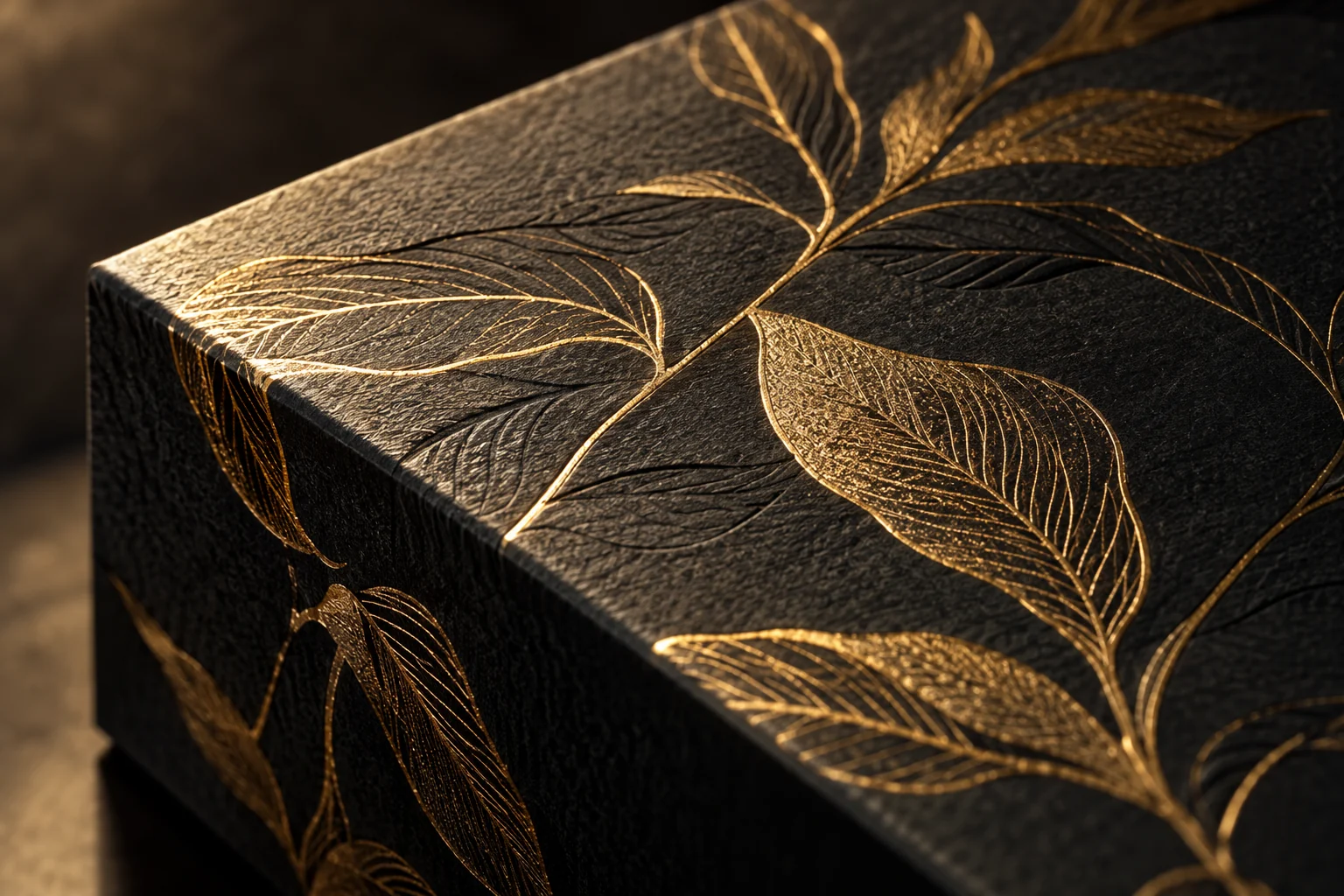
Material inspiration. Request a sample for the specific finish.
HOT FOIL STAMPING
Foil creates a reflective accent. If you want relief as well as shine, discuss combining it with embossing.
Discuss this finish ↗Paper, printing, structure and finishing are developed as a system. We can help you balance the visual effect with your budget and quantity.
Explore our integrated capabilities ↗THE MANUFACTURING DETAIL
Foil reproduction depends on die detail, pressure, selected foil and the paper surface. A fine botanical illustration on textured black stock asks different questions from a large logo on smooth paper. Supply vector artwork, identify critical strokes and evaluate edge definition on the actual stock.
Foil and embossing can be combined, but registration and paper behaviour must be developed together. Inspect the physical finish under neutral light as well as the grazing light used in product photography.
Prepare artwork for the production conversation ↗BEFORE YOU APPROVE
Supply vector artwork, the proposed paper and the critical fine details. Identify any coverage that crosses folds so it can be reviewed in the sample.
Record the approved materials, artwork revision and physical sample, with the relevant appearance, fit and packing criteria agreed before production.
YOUR NEXT STEP
Review foil tone, artwork detail and placement on the actual paper before approving the decorative result.