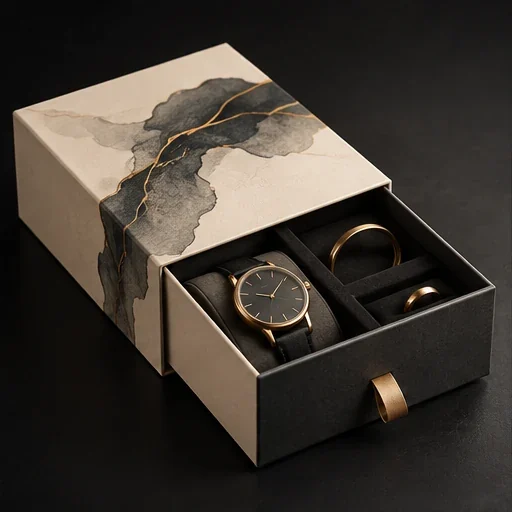
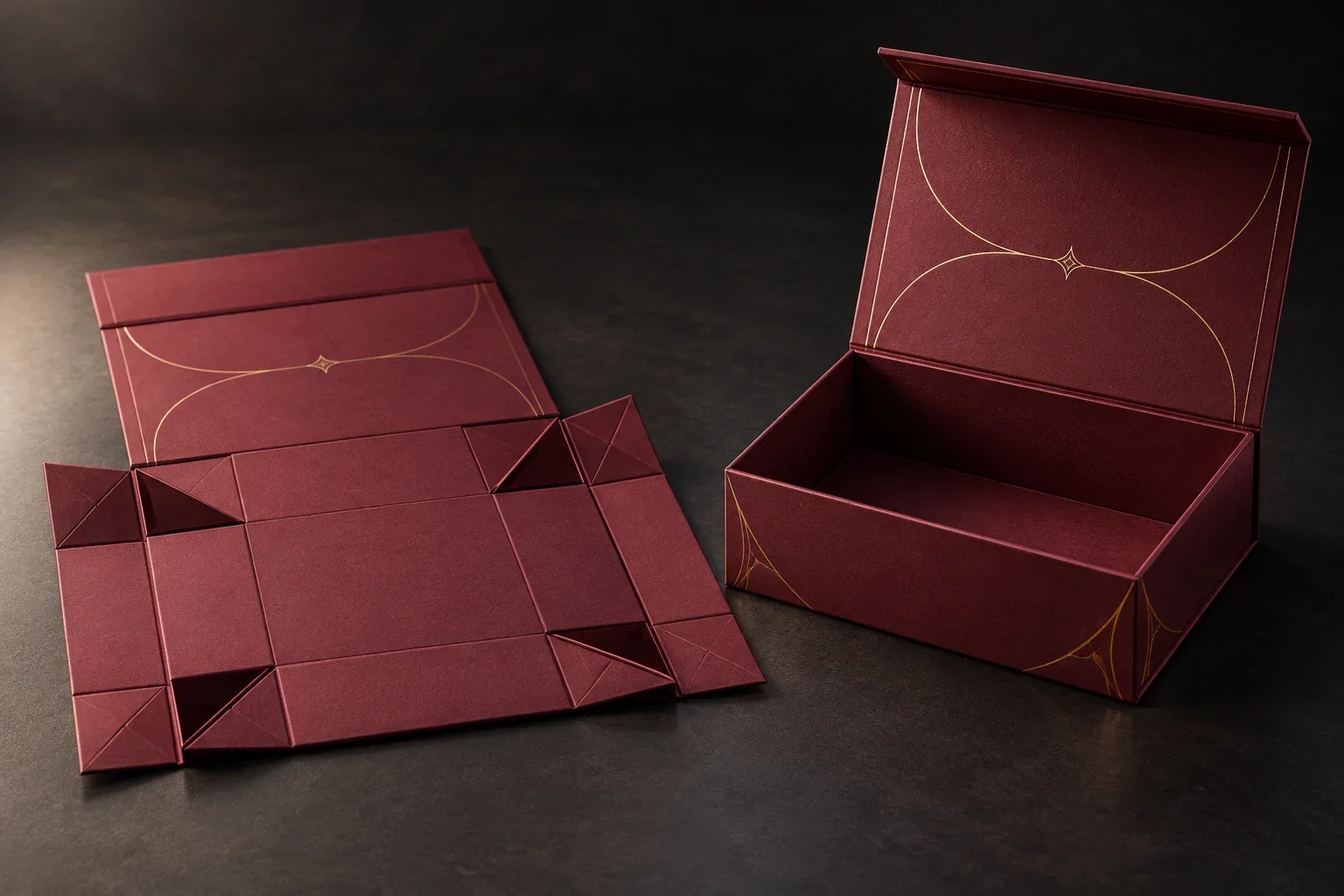
Fit the complete size range
Review products folded, wrapped or in a pouch instead of selecting dimensions from an empty box.
FASHION & ACCESSORIES
Build a coordinated box family around folded products, pouches and packing operations, using shared paper and finish references.
YOUR PRODUCT / YOUR CUSTOMER / YOUR NEXT DECISION
Review products folded, wrapped or in a pouch instead of selecting dimensions from an empty box.
Use shared paper and finish references across sizes for a consistent brand presentation.
Review tissue, ribbon and fold-flat assembly with retail or fulfilment teams.
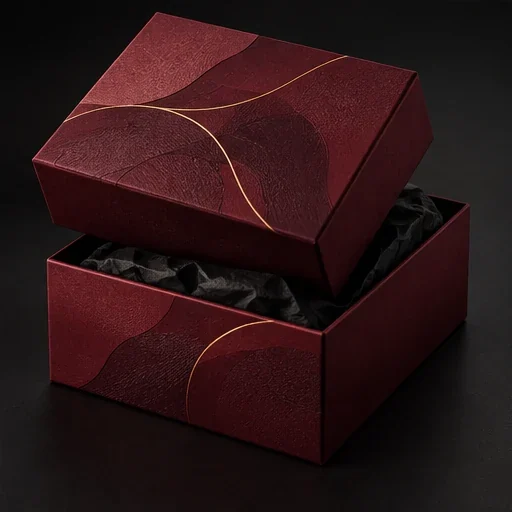
LET’S DEFINE THE RIGHT SOLUTION
Your product sets the dimensions. Your market sets the requirements. Your brand sets the impression.
Discuss your project ↗PACKAGING DECISIONS FOR FASHION & ACCESSORIES
Map the product sizes and how they arrive in the box: folded, wrapped or in a pouch. A common paper and finish can unify several dimensions without making every item use an oversized structure.
Decide whether retail staff or fulfilment teams will assemble the packaging. Tissue, ribbon and fold-flat construction influence station space and packing time. Test the presentation with the actual accessory, not an empty box.
Explore a related development study ↗APPROVE WITH YOUR REAL PRODUCTS
Record the actual components, artwork revision, materials and packing method that were approved. Changes need a clear decision before production.
Review sample approvalBEFORE YOU APPROVE
Coordinate paper, finish and layout across a size family. Test actual folded or pouched products so consistency does not require unnecessary empty space.
Include the retail or fulfilment team responsible for assembly and product loading. Review tissue, ribbon and station space together.
YOUR NEXT STEP
Build a coordinated box family around folded products, pouches and packing operations, using shared paper and finish references.