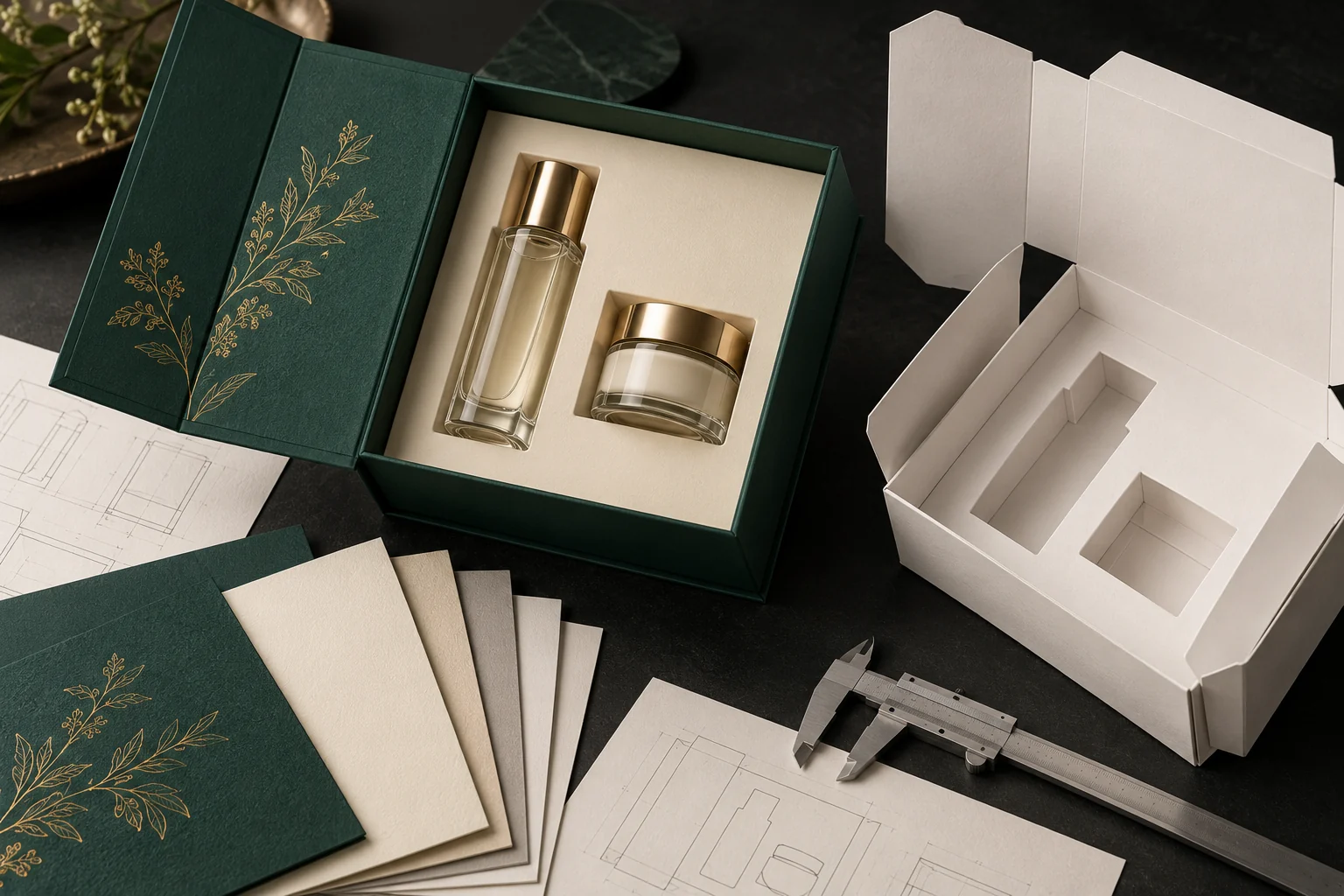
Measure beyond the nominal volume
A 50 ml bottle is not a dimension. Record the maximum width, height, cap or pump, filled weight and any protruding parts. If a closure or label is changing, identify the final component revision. Use physical components to check the sample rather than assuming the supplier drawing includes every variation.
Select the contact surface deliberately
Paperboard offers a paper-based construction with folded or die-cut restraints. EVA offers precise cut-outs and a different feel under the hand. The right choice depends on product weight, fragility, presentation and the intended disposal route. A paper-based outer box with a mixed-material insert should not be described as universally recyclable.
Separate locating from gripping
An insert must hold the product through packing and handling, but excessive interference makes removal awkward and can scuff the decoration. Position contact areas away from fragile labels. Test finger access with the actual product and a user unfamiliar with the package. The aim is secure restraint with an obvious exit path.
Use the white sample to find expensive mistakes early
A structural prototype can answer fit, box size, opening and packing questions before final paper and tooling are committed. A decorated sample then adds colour, foil and wrapped surfaces. Keep those approvals distinct and record which product components, artwork and materials were used.
PHYSICAL SAMPLE REVIEW
What to check before approval.
- Check bottle and jar clearances with final components, not volume names.
- Load and unload the set repeatedly; inspect labels and glass surfaces.
- Check card storage and whether the lid closes without pressure.
- Agree the insert material, fixing method and assembly sequence.
- Approve any transport tests against the actual shipping arrangement.